
Cornish farmer Stuart Oates campaigns for farmers to turn fossil free
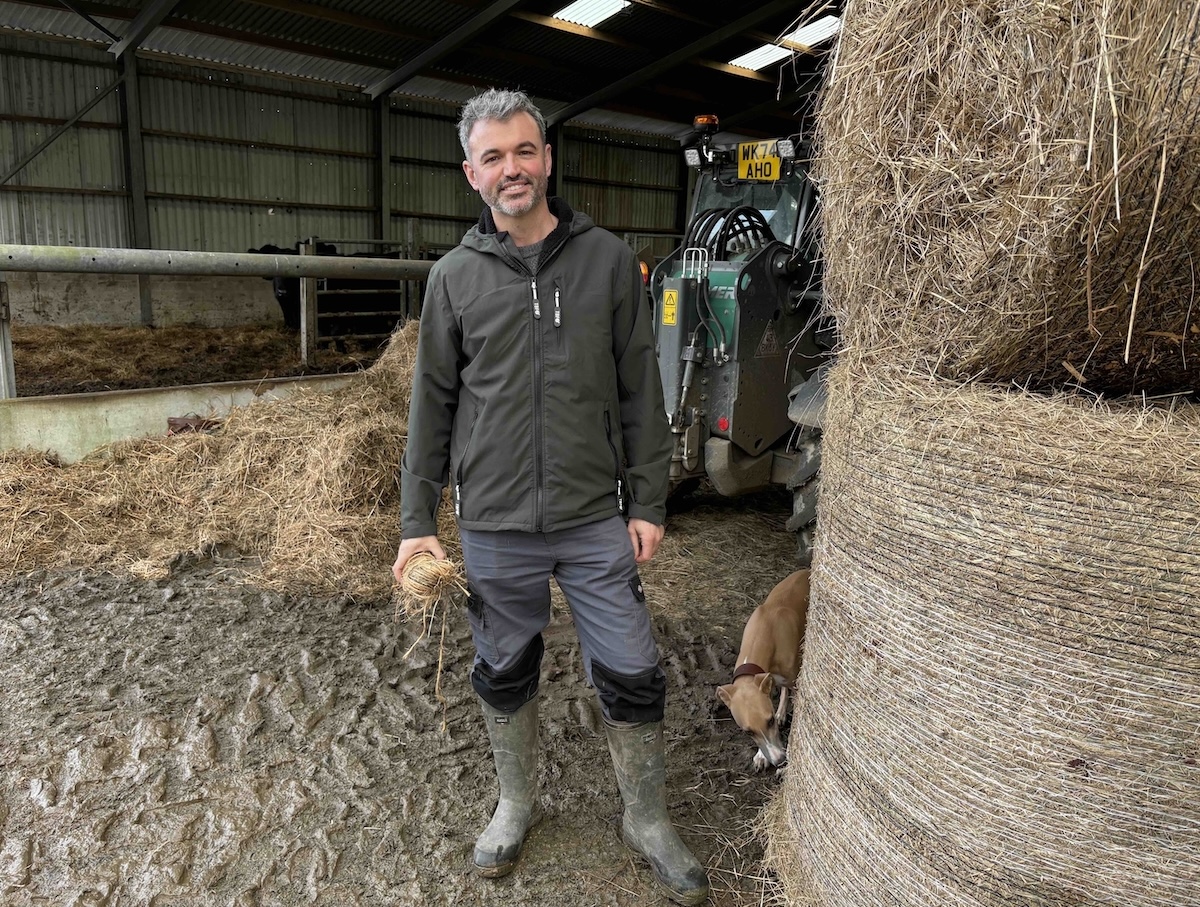
Stuart on the farm with his pup Ernie
Stuart Oates is a seventh-generation farmer working the land of Rosuick Organic Farm, located deep in Cornwall’s Lizard Peninsula. His family has owned the estate since the mid 18th century.
Their pastures span over a thousand acres, where they mostly rear cattle. Besides this output, they restore species back into grasslands and perform targeted grazing on heathland for other organisations, such as the National Trust.
Stuart informs The Mouth on his approach to fossil free farming.
As the farm is organic, chemical fertilisers aren’t used to cultivate the crops. Stuart expresses the gravity of using them, putting it into context he claims, “It’s a thousand litres to make one tonne. Imagine that in a car, that would take you 10,000 miles. It’s a serious amount that I don’t think we can carry on doing.”
Oates remarks that a farmer’s legacy is in passing on their farms to the next generation, and to do this they need to “stay ahead” when it comes to a changing climate – “If you don’t change, you aren’t going to survive. Fossil free farming should end up being a gain.”
For the future, Stuart forecasts farmers as being harbourers of food, environmental and energy security. Owning vast expanses of land, farmers have the space to produce energy from solar panels and wind turbines. He insists these projects can yield up to 30% returns, when the average farm currently relies on a 3% return for food production.
The Department for Environment, Food & Rural Affairs reported the agriculture industry contributed £14.5 billion to the UK economy in 2024, with 17 million hectares being farmland, equating to 70% of the total land mass.
As farming has become growingly unpredictable, the Oates have been turning to innovative strategies which are stabilising their operations.
There are “easy wins” notes Oates. Rosuick’s tractors all run on HVO fuel, a short-term fix that’s “cleaner and purer” than regular biodiesel. The long-term hope he has is for a switch to electric, adding in the future,“It’ll be feasible to store up enough energy to be able to get through a whole workday.”
Among other initiatives, Stuart Oates has tested the benefits of using sisal twine made from cactus to wrap up hay bales as an alternative to plastic netting, he affirms “It’s incredibly sustainable, and it’s supporting developing economies.”. Being a Nuffield scholar, his trips have taken him to the factories across Brazil and Tanzania where the string is made.
Stuart describes what needs to be done to move English farms forward, arguing in the last 30 years there’s been a latency in progress achieved. Despite this he is “enthused” by the up-and-coming developments in regenerative farming, expressing some sentiments farmers hold of an “agricultural revolution” on the horizon.
“People are understanding that it’s becoming cheaper to work with nature than against nature.”
From working behind the camera on TV programmes, namely Country File, Oates has recently started producing a show of his own, to raise awareness about the greener practices shaping the future of farming.
The mission of the Sustainable Food Trust podcast is simple he says, “If we can spend an hour helping people understand why food is so essential in people’s lives, then we can make a real change and get the public asking for the right things.”
Farming is at its tipping point, since the government cut the sector’s budget by £100 million a year. Farmers are facing harsher weather conditions, a third struggling to stay financially viable.
Stuart envisions what he has in mind for the opportunities farmers can seize to provide growth for their businesses. His next plan for Rosuick in the new year is energy.
“I calculated all the roof space on my farm, and it’s about an acre. That’s not taking up any land. If we could sell that power back into the grid to local businesses, they could buy it cheaper without any big grid fees. I see a massive opportunity for farmers to start producing power.”