
Beyond Spellcheck: How AI Is Reshaping Support for Struggling Students
Between 79% and 92% of university students utilise Artificial Intelligence (AI) to assist them in completing their work. Within that statistic, around 20% of university students have specific learning difficulties and mental health conditions. These students are required to have additional help that the universities have put in place for them. At the University of Falmouth and Exeter. FX Plus is responsible for giving students with a disability allowance access to a specialist study skills tutor.
Justine East is one of the many study skill specialists. East’s role mainly consists of addressing barriers to learning, whether that be reading, writing, and a wider range of central executive functioning tasks, such as organisation and time management. Justine East has numerous students enrolled in a variety of courses, ranging from the arts to science, and they vary in the level of support required, as different students face different daily challenges in their academic lives.
East stated that the usage of AI has increased rapidly within the last “18 months” During this time, Justine East has been impacted both positively and negatively within her work. One positive outcome is that it lessens the workload of issues East must address in student work. For instance, they could use Chat GPT to help organise the structure of the students’ essays or to phrase sen tences coherently; therefore, East is able to focus on helping the student achieve a higher level of skills. “Often, with some students with more advanced needs, with writing, we would have never otherwise been able to move beyond the basics because we just don’t have enough time in the sessions, so this is a positive way in which AI has impacted my role”.
A negative way in which AI has affected Justine East and her efforts to help her students is that AI isn’t advanced enough to meet students’ needs, for instance, by offering unverified sources and using incomplete referencing software. Therefore, students then go to East “for help with, and my reply is always that I am ‘old skool’ and get students to learn how to do Harvard Referencing without AI, and that they shouldn’t trust software to do it for them”. AI shouldn’t be there to replace their understanding; it should increase their understanding.
Another benefit of students using AI is that it can increase their confidence when producing work, as it provides suggestions on how to improve their work. However, some students take advantage of AI and use it for their whole writing piece, which makes their work unrealistic, and the standard doesn’t vary throughout the “human writing is idiosyncratic, it peaks and dips in its quality unless you’re a professional writer (which undergraduates are not), so a s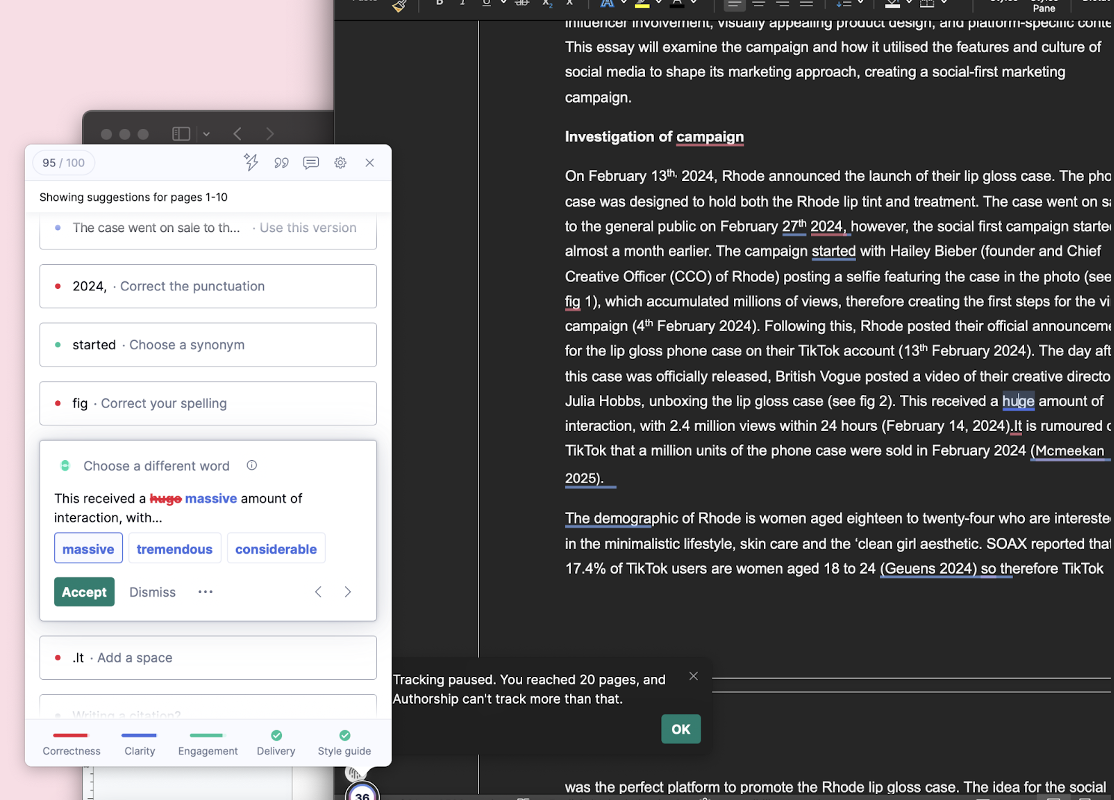 tudent’s natural writing will have good bits and some not so good bits even within the same paragraph”.
East stated that the government has repeatedly made cutbacks within her job role over the years, leaving students with less and less study skill support, therefore, leaving room for AI to build the gap. AI has a positive effect on Justine East and her job role, particularly in assisting students with their academic work.