
Greenhouse gas emissions from AI data centres could play a role in increased damage to Cornwall’s coastal communities due to rising sea levels.
According to the International Environment Agency, asking a question to AI chatbot ChatGPT uses ten times the amount of electricity than a single Google search. This causes more fossil fuels to be burnt, and global warming to increase.
Furthermore, The Guardian reports that 2025 carbon dioxide emissions caused by the “AI boom” are as much as that emitted by the whole of New York City.
Claire Wallerstein, series producer of environmental film organisation Cornwall Climate Care, is concerned by these statistics.
“It’s just baffling when you read the figures. It makes my brain break a little bit, thinking that we’re ploughing ahead with this new technology.”
Greenhouse gas emissions cause sea levels to rise by melting land ice through global warming, with the melted ice adding significant amounts of water to the oceans. Claire believes that many people underestimate this amount.
“Sea levels have risen by around 20 centimetres, which to many people doesn’t seem like much. But when you consider that the ocean covers 70% of the planet, that small amount is suddenly enormous.”
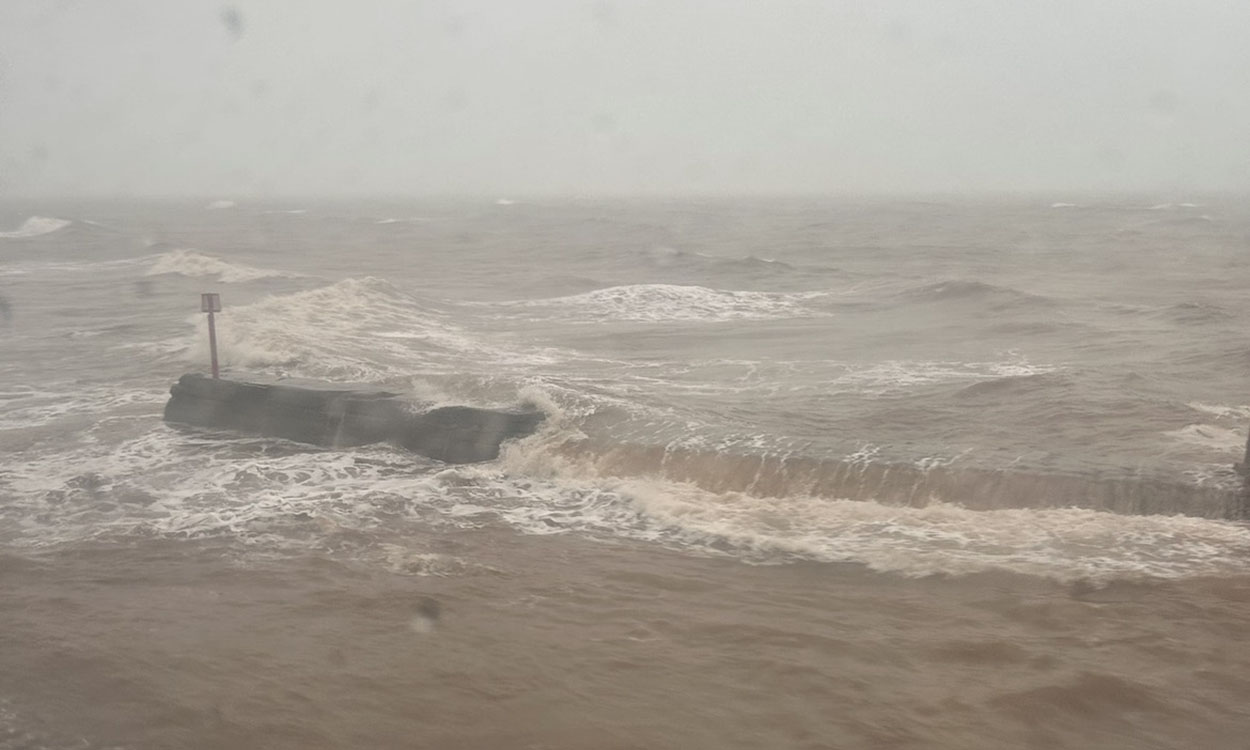
Sea levels have risen considerably due to global warming.
The immense damage caused by Storm Goretti is just one reminder that coastal communities need the public to be more conscious about the climate to survive. Higher sea levels push more water inland during “weather bombs” like Goretti, with large waves crashing against buildings, and causing floods.
Regardless of this, AI’s popularity continues to grow. OpenAI, the company that owns ChatGPT, was reported to have made more than $20 billion in revenue in 2025, up from $6 billion the year prior.
Claire believes that “climate denial” causes us to make poor choices for the climate such as this.
“People don’t see that climate change is happening because it unfolds slowly in a human lifetime, which is just a pinprick of time on the geological scale. It can be hard to see these changes, but they are happening.”
Protecting Cornwall’s coastal communities from sea damage is a costly process. A scheme named Flood Re is committed to protecting Cornwall’s homes from flood damage until 2039. However, after this time, this protection will stop.
Claire said: “At that point, insurers will be able to make the decision to not insure. They’re not stupid – they know how much it will cost. They will not spend the money to protect homes on the seaside.”
Damage caused by rising sea levels are not just detrimental to structures, but to people’s wellbeing. Claire remembers when a storm surge hit her Cornish seaside village in 2014, recalling how people were “running for their lives” as many houses were “completely smashed”.
“I think we will increasingly see coastal communities become abandoned in that way. Mental health impacts can be huge from that.”
At the moment, Claire believes there is a lot of “frivolous” use of AI, pleading that people cut down on usage for the good of the planet.
However, she is hopeful that people will develop methods that are more climate friendly, “creating less heat and using much less energy.”