Gen Z have been thrust into a digital age like no other, AI tools have become widely available for people to make use of for a multitude of reasons, from summarising research to image generation and grammar checkers. The younger generations have been tasked with adapting and learning to work with AI as it continues to only expand further. There are many ethical considerations to bear in mind with such software however, and University of Exeter Business student Olivia wanted to weigh in on the discussion with her own thoughts about the ethical considerations when it comes to using AI.
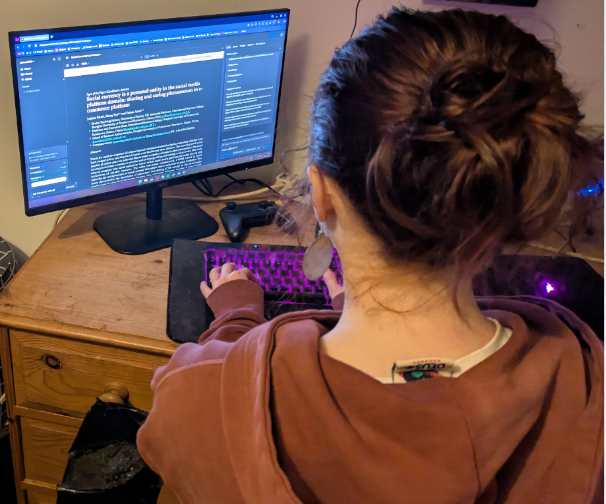
Olivia using AI at home
What do they think?
“I personally don’t think it’s ethical to use AI because of environmental reasons, especially when I’m learning about sustainable businesses that also use AI, I just think its unethical and quite hypocritical.”
This brings forward the question on the message these businesses try to send about their environmental ideas, which are less reliable due to also making use of AI software. AI is often run through data centres and these data centres can take a heavy toll on the planet. The electronics they house rely on a staggering amount of grist: making a 2 kg computer requires 800 kg of raw materials.
It is also noted that these materials are often mined in “environmentally destructive ways”.
Bearing this in mind, the prospect of universities also pushing AI software calls into question the ethical considerations made by the university.
How does it change university work?
“I don’t think it’s so bad in terms of the university as, most of the time, they advise against using AI like ChatGPT for work due to its inaccurate nature and samey sounding answers that students sometimes try to use in their own written work.”
The university seems to advise against using AI for academic reasons, but the question still remains as to how much of this is in the fight to preserve the environment or just to preserve the academic integrity of work handed in.
“I personally try to limit my AI usage as much as possible as I just disagree with the damage, both short and long term that its causing, but I can see the many benefits that also come with such software for shortening heavier workloads for written work.”
The moral dilemma
This calls out the dilemma students face in terms of wanting to be ethically right while also weighing the benefits of software such as Anara, which is a tool designed to analyse papers and other content to provide the exact information the user asks for with references and such.
Another example of academically beneficial AI tools would be the popular Grammarly. This was one of the earliest academic AI tools and functions simply to support any grammar and spelling errors and can give students peace of mind when submitting their work.
AI will always have benefits and drawbacks academically, but people tend to overlook the ever-important ethical considerations that are becoming more important as AI becomes more mainstream, sticking students like Olivia in potential mortal dilemmas about easing the workload in exchange for feeling morally wrong for using such tools in their educational lifestyle.