
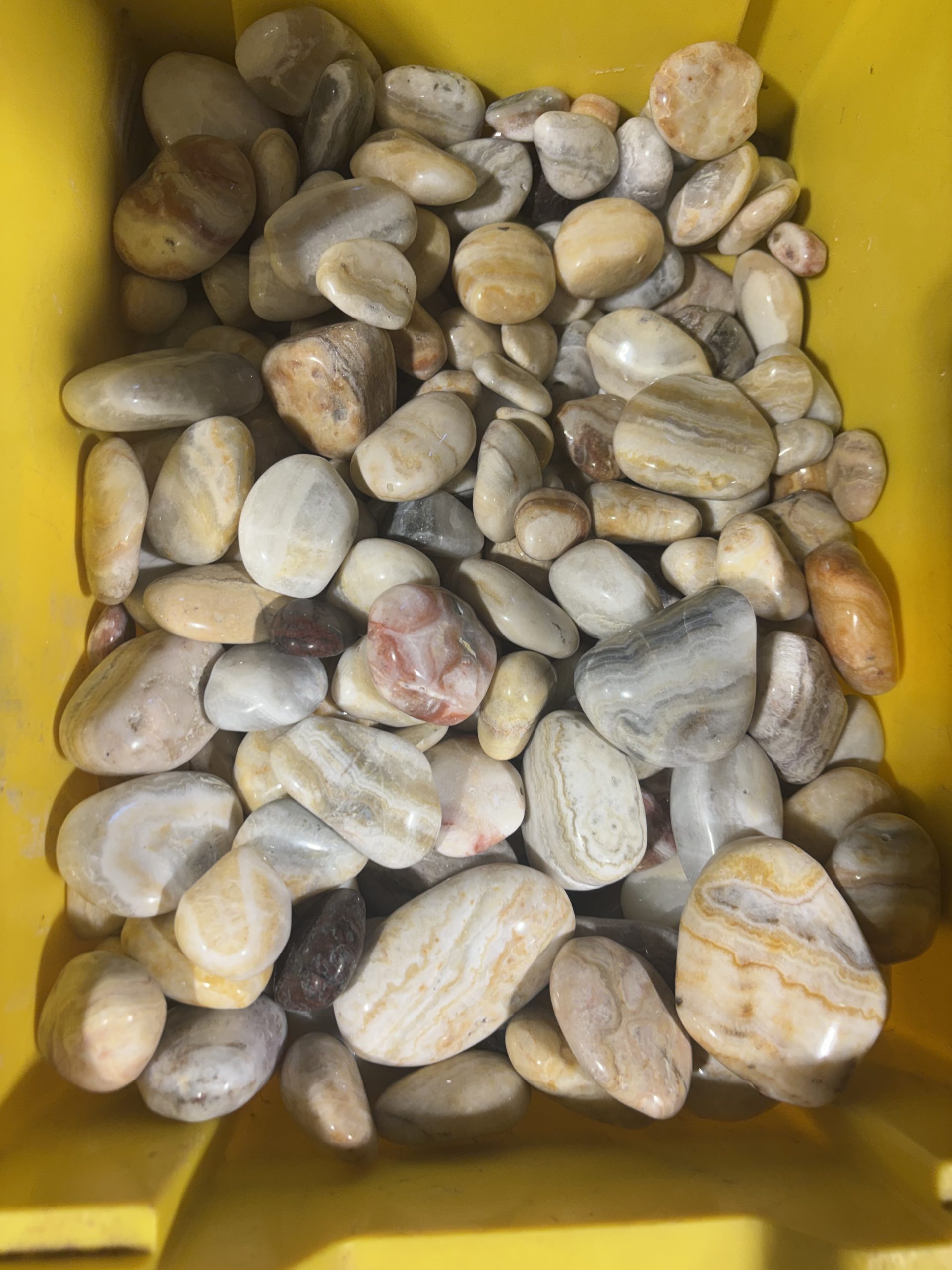
A collection of agates found on beaches in Cornwall.
Behind the beauty of crystals lies an industry shrouded in controversy and immoral practices, but Cornwall might be the answer to the future of ethical and sustainable crystal sourcing.
In this small corner of the world lays hundreds of varieties of minerals, making it one of the most diverse geological landscapes in Britain.
Ben Church -a geologist and lapidarist based in St Agnes, Cornwall- collects, cuts and polishes crystals he finds on the coast, he says they are “completely sustainable”.
What makes them sustainable and ethical?
The sustainability of these semi-precious stones is attributed to their “never ending supply”, each winter the waves cause the cliffs to erode, producing more rocks to be collected from their natural habitats.
Ben explained how it is possible to find and collect Cornish agates and quartz on beaches across the county, “some of the best material I collect is literally walking distance from my front door…Cornwall has a huge range of minerals.”
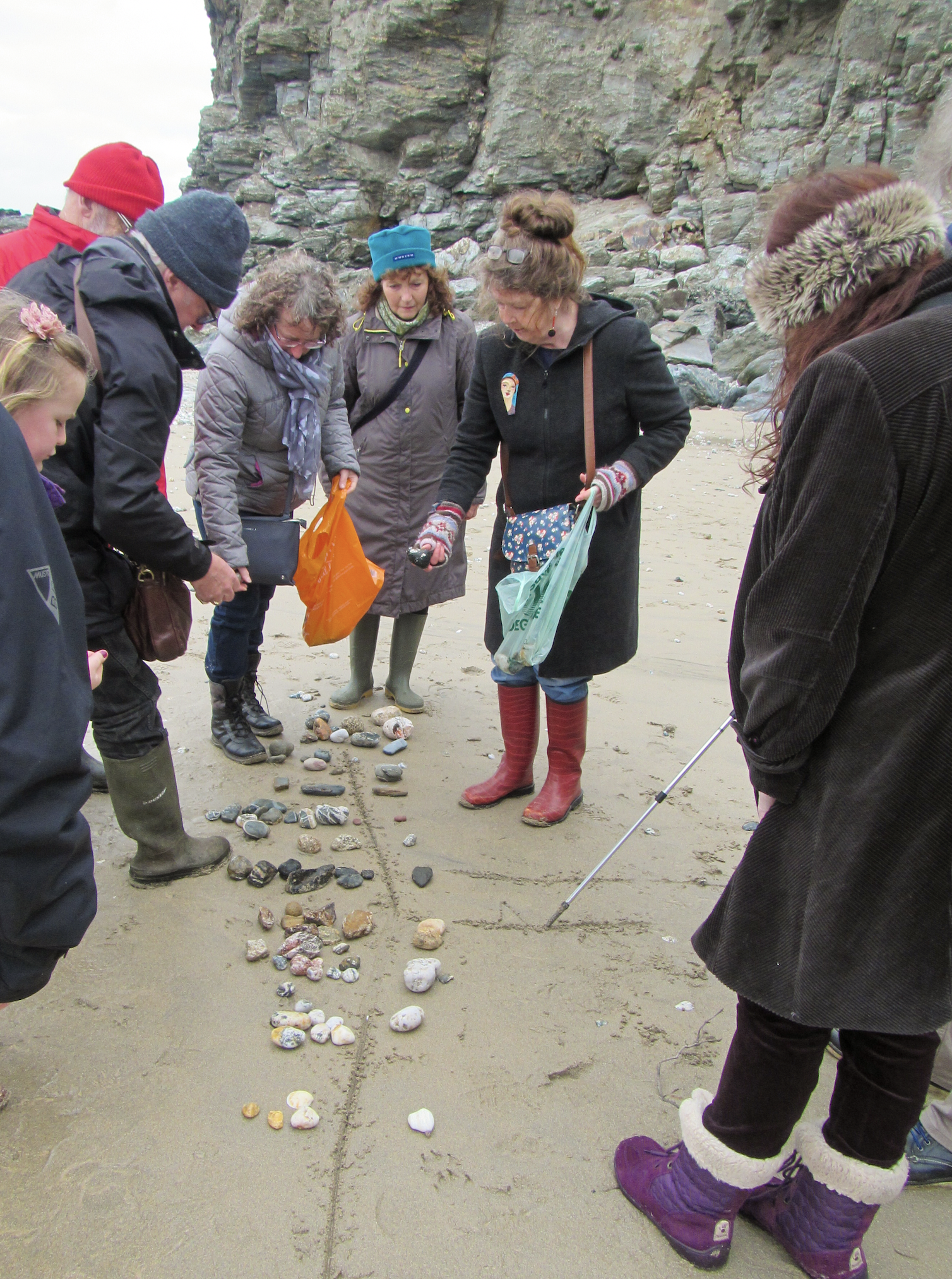
A geology walk identifying crystals found on the beach (photo by Ben Church)
Most of these crystals are found through beachcombing: the activity of walking along a seashore or intertidal zone to search for and collect items of value, interest, utility, or natural beauty that have been washed ashore by waves and ocean currents.
Since the rocks are gathered from the coast or pre-existing and derelict mines, it eliminates the negative environmental impact caused by crystal extraction.
The method of beachcombing is ethical because it bypasses the exploitative global mining industry that enables underpaid workers and child labour.
The controversy of the crystal mining industry
The mining industry often attracts media attention but one particular area that escapes the limelight is crystal mining, which comes with its own issues.
The main problems regarding this sector are the abuse of human rights and environmental damage caused by extraction.
National Geographic says, “The social impacts of crystal mining are equally wide ranging: In some cases, it can boost the local economy; in other instances, it can fuel worker exploitation and even armed conflicts”.
In countries like Madagascar, one of the biggest global exporters of crystals, around 80% of the population lives in poverty and over 11,000 children are forced to work in unsafe conditions according to UNICEF.
Mr Church expressed his opinion on the problematic industry and how consumers are blindsided by retailers “people often have no knowledge whatsoever of how the minerals are being sourced, whether its kids being sent off to collect stuff scrabbling around in the dirt…or whether they’ve been using explosives and raiding the countryside whereas my stuff… I can tell you whether it’s been raining that day, being able to tell that story is really valuable”.
What is a Crystal?
‘Crystals’ is a broad term for precious stones that have different structures, colours and usages. A crystal is a solid whose atoms are arranged in a complex and repeating pattern.
These stones form over millions of years, hiding in cliff faces, caves and even the shingle covered beaches of Porthtowan and St Agnes.
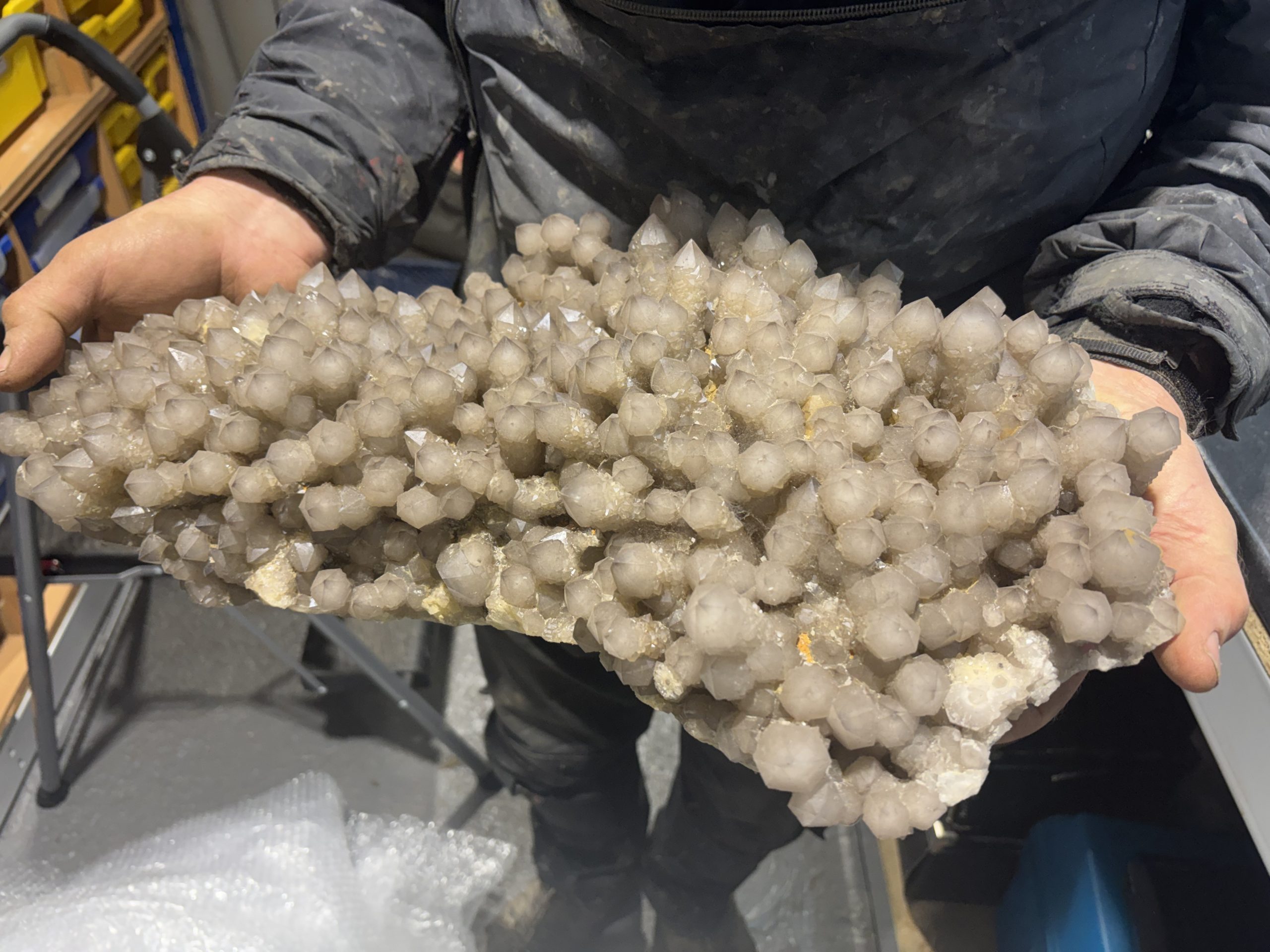
A large piece of Cornish smoky quartz.
There are many uses for crystals whether it be aesthetic, incorporating crystals such as quartz and agates into jewellery or for home decor or for crystal healing, a metaphysical practice that believes that certain crystals possess properties like enhancing confidence and a calming essence.
Not a full alternative to buying crystals
While it is fascinating to find and collect beach materials it should be made clear that beach combing is not a free-for-all, being respectful of the coastal environment and habitat is imperative.
Ben Church explained that “it is technically illegal to remove beach material from between the tide lines because it is the property of the duchy of Cornwall, but it is extremely rare for anyone to be accosted” the rules are flexible for Ben as he has a license to do so.
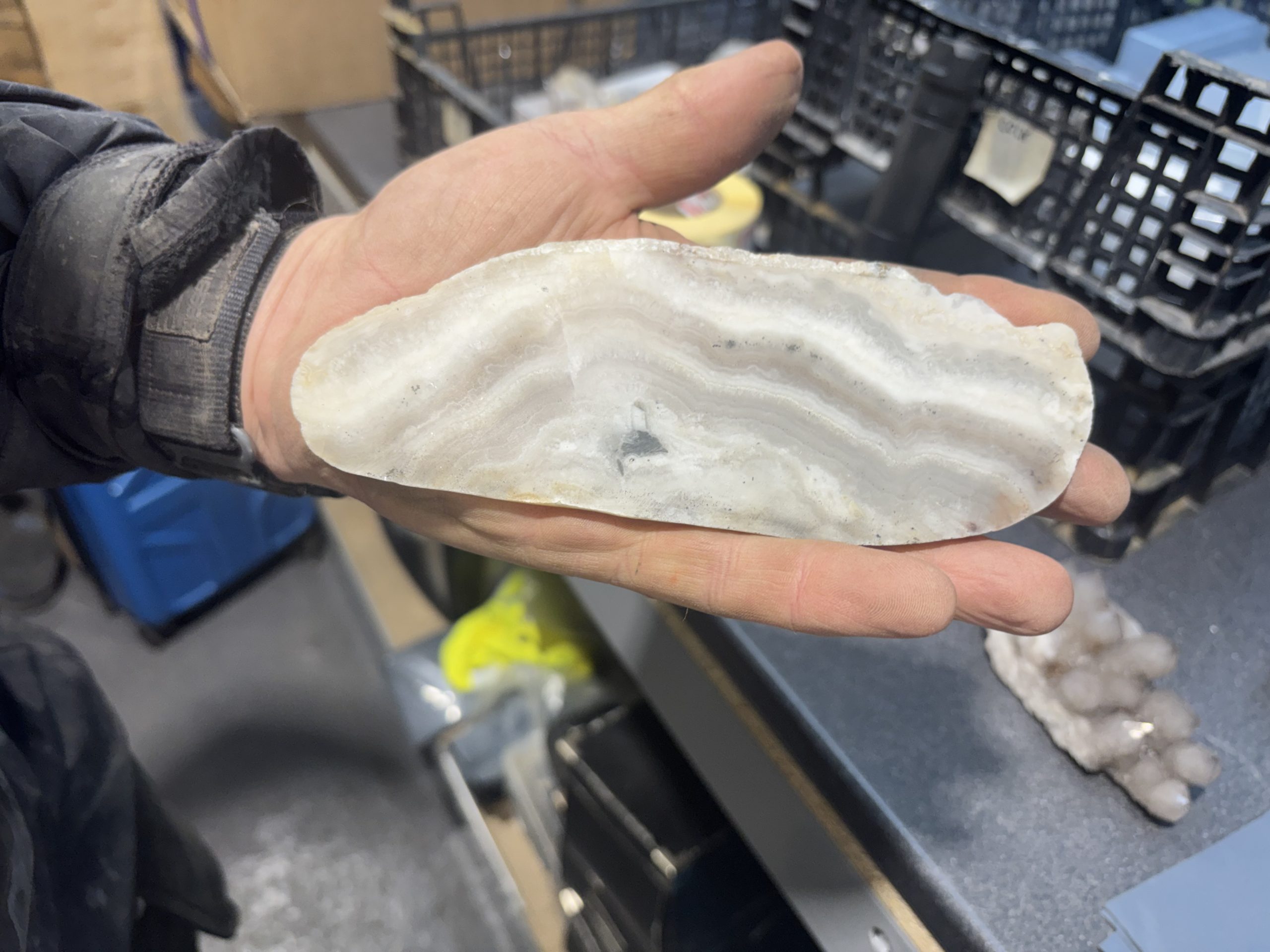
An agate with a pattern that imitates Godrevy lighthouse.
Although the Cornish crystals are beautiful there are only certain places in the world where specific ones can be found for example Larimar can only be found in the Dominican Republic.
There is a limited variety of minerals that can be found on Cornish beaches and finding them depends on weather conditions.
How you can find crystals ethically and sustainably
If you care about the unethical journey of exotic crystals from mine to shelf you should:
- Avoid buying from unethical suppliers, look into the background of the retailer and where they source from before buying.
- Have a go at looking for crystals on the beach, collecting in the winter when there are more pebbles.
- Support small businesses rather than wholesalers who support exploitative working conditions.