
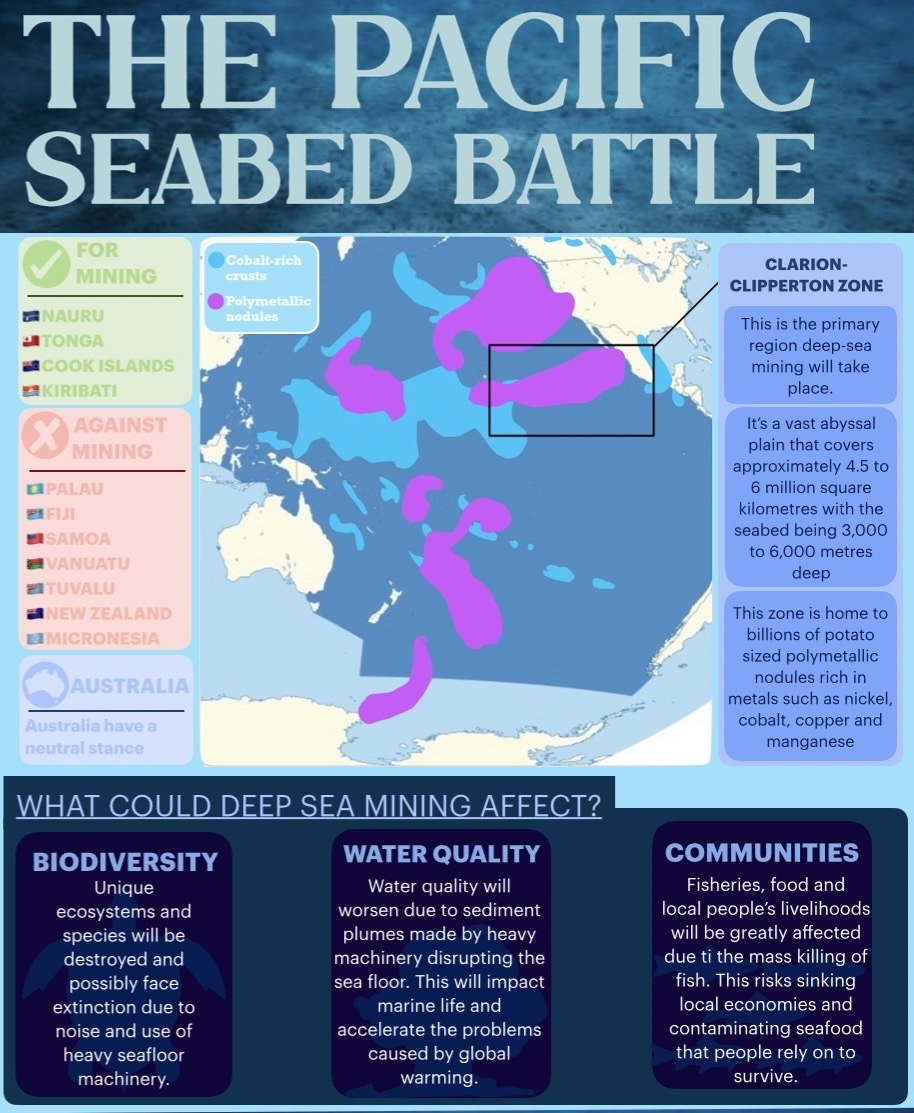
Discussions regarding Deep-Sea mining have sparked controversy for over 6 decades, particularly regarding the Pacific’s ‘Clarion-Clipperton Zone’, an area roughly six million square kilometres that contains billions of metal-rich nodules.
Rising global demand for minerals such as cobalt, nickel and copper has sparked a geopolitical race between the United States and China to secure mineral nodules for future technologies, the rush to do so however has left the Pacific Island Nations divided.
A few of the nations including Fiji, Palau and Vanuatu strongly oppose the idea, attempting to protect their waters from exploitation and irreversible damage that could affect their fishing industry- a vital part of their national income.
On the other hand, pro-mining nations such as Nauru, Kiribati and the Cook Islands believe the minerals they will harvest are vital, particularly as they’re used in green technologies which will generate national revenue and contribute towards a transition to a green future.
Environmentalists warn that heavy machinery will cause toxic sediment plumes and cause noise pollution that will disrupt marine life, water quality and even threaten the collapse of multi-billion-pound tuna fisheries that many of the nation’s survive on.
Screenshot