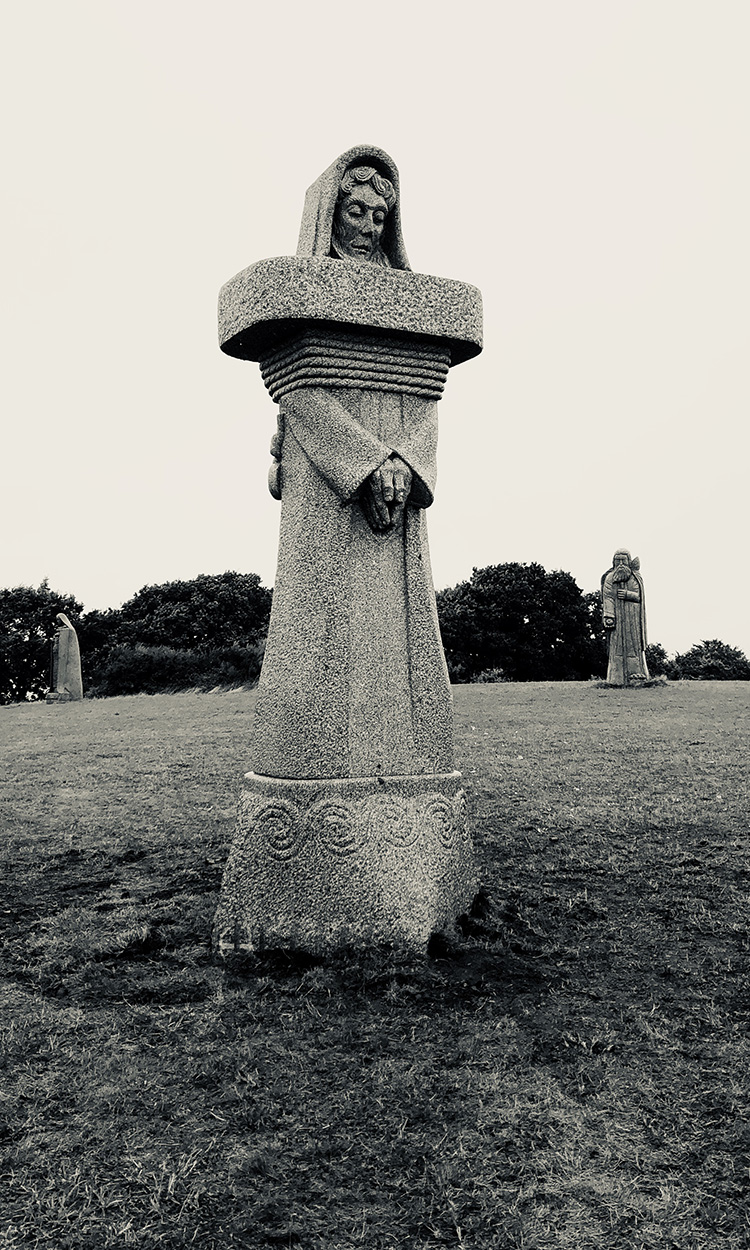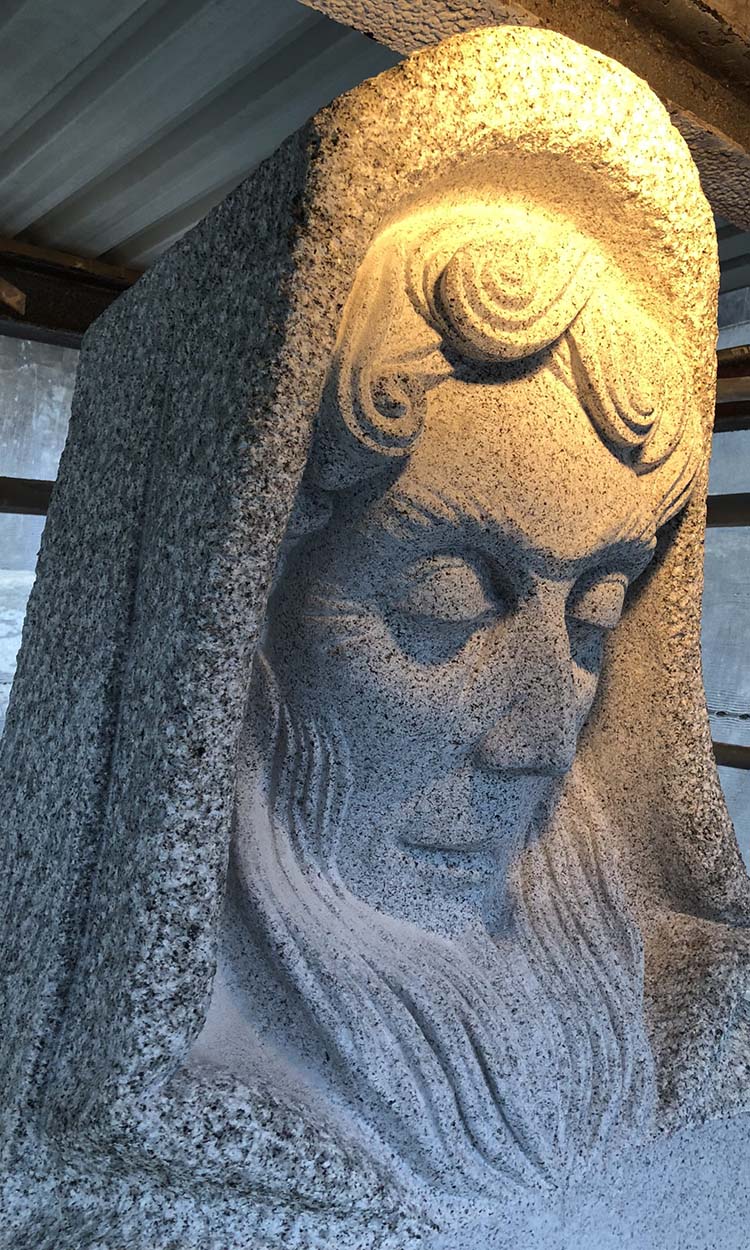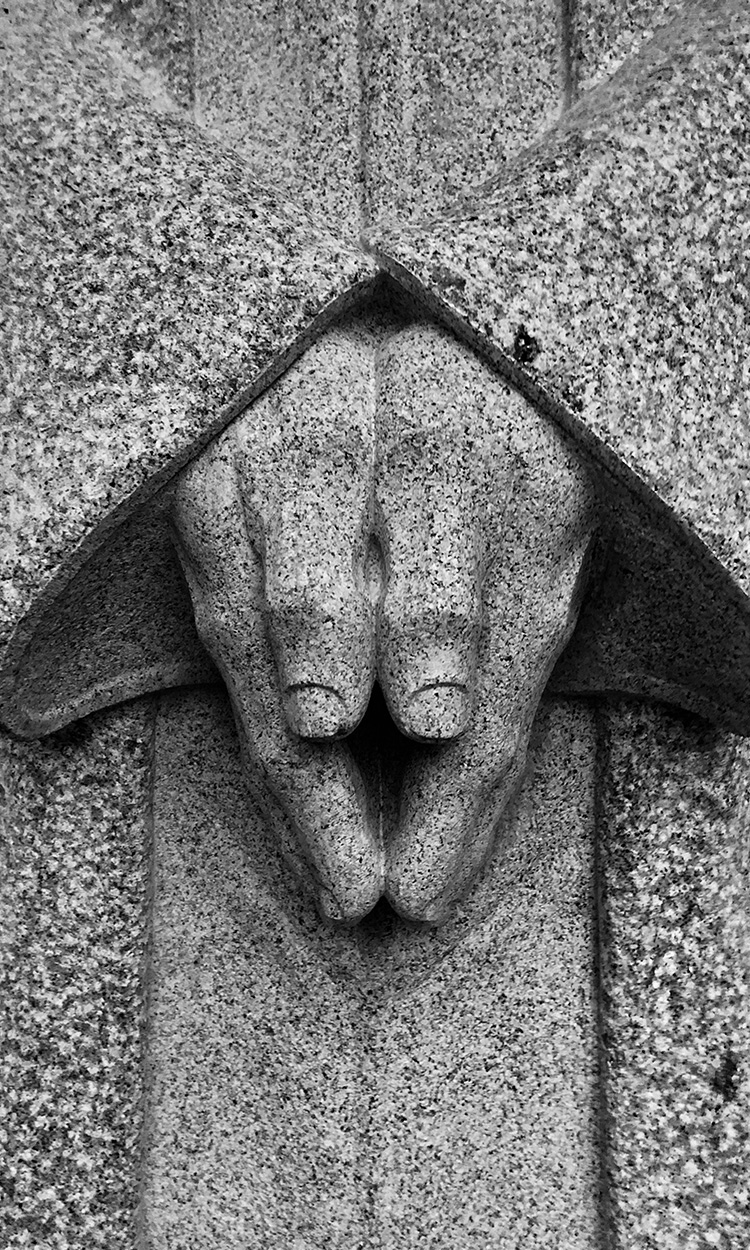
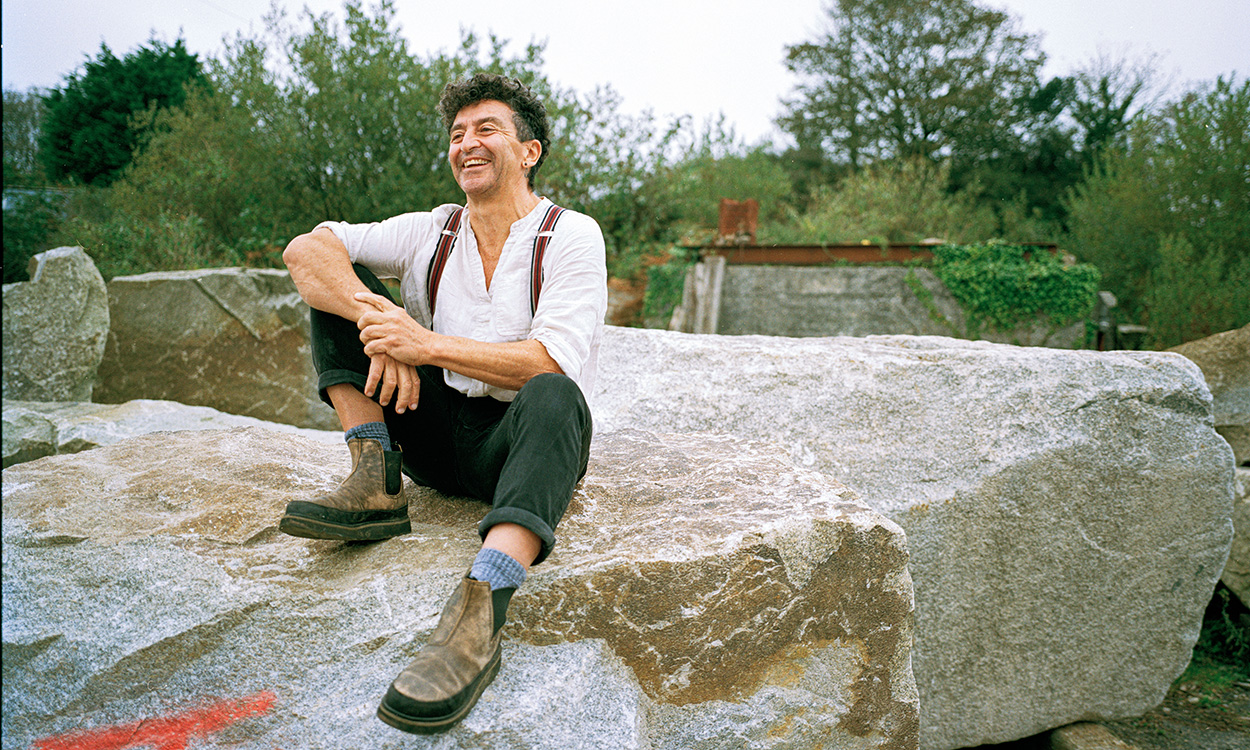
Granite sculptor David Paton says that working with stone changes your whole being.
Words: Teva Gimpel-Hertz
Photographs: Stefan Michalski
David Paton is a stone sculptor, amongst other titles, based in Falmouth. Over his career as an artist, he has explored a myriad of materials, stone becoming the focus of his practice in 1995. I met him, to hear about his practice and the decisions, processes, and education of a Stone sculptor in the contemporary art world. We met him at T Marsh LTD, a Cornish quarry, which has witnessed David’s entire granite sculpting career since 2008.
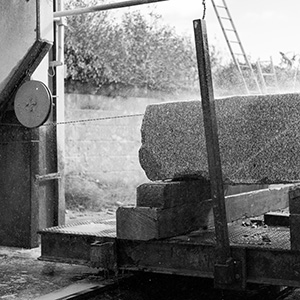
At the quarry, any preconceived notion of stone carving being a dying art feels highly untrue. On this sunny day, it feels full of life. Masons, sculptors, and quarry workers work, machines whirl; a large piece of granite is being sliced. A dog runs around, and quiet conversation underpins the work.
Why granite?
When I came to Cornwall, someone commissioned me and the only stone around was granite.
David was pointed in the direction of Tim Marsh, the owner of T Marsh LTD, who helped him pick out his first granite and offered him a space to work.
Can you tell me about the process of working with stone?
There needs to be some sense of what you want from it.
Stone is extracted for numerous reasons; the amount quarried varies in size. With sculpture, it can be quite specific; resulting in less waste; this is not always the case.
With the model we made for St. Pyrin, it ended up being from 25tons down to about 4.5 ton. But quite often I do use the waste granite.
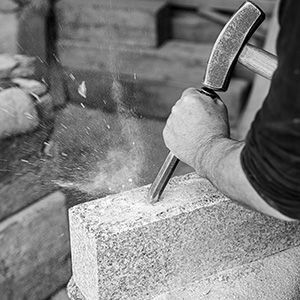
I will use any tool to do the job including grinders and saws. But the most joyous part is using a hammer and chisel. The thing that probably matters most is rhythm. You have a kind of conversation with the stone…, it affects your whole being, your body changes shape. You have to work at a pace that you can sustain you for an entire day and a whole week, and so on. It’s like dance. It’s not about brute strength. It’s about training your body with techniques and stamina to do the skills.
What first drew you to working with stone?
I reflected on it in my PhD, I thought it might be connected to going to my dad’s quarries in Africa. As a child, he would take me to see what he was doing. I can sort of viscerally remember these hot places with their currents of aggregate and machinery.
David described to me the work his dad was doing in Africa as a quarrier, reflecting on his childhood there, in which he was always running around barefoot. Hearing stories of far-away quarries whilst standing in a quarry in Cornwall, I think about how our past shapes our present. Despite the years where stone wasn’t part of Davids practice, he found his way back to it.
I didn’t do stone at University, I did sculpture… from different stuff, like metal, concrete, steel… I decided after my degree that I just wanted a lump [of stone] that I could do something with.
How has your practice with stone evolved?
For a long time, I did commissions in the north of England. It felt like the contemporary fine art world was not interested in stone. I got a sense they viewed stone carving as a defunct mode. Kind of ending with Barbara Hepworth. But stone felt like a really important medium to work with as an artist, but I didn’t really have the language too.
Why was it important?
Humans have been making references to themselves with stone for thousands and thousands of years. It can’t be that irrelevant. We still build houses from it. The craft of working with it felt important, but I didn’t have the language to put stone in its place in the world.
David undertook an MA in Contemporary Visual Art, at Falmouth University. To learn the langu
Because it annoyed my tutor who didn’t like stone carving, I had to put a bit in there, it was just a nice joke.
His MA research focused on art as a social tool.
In 2015, wanting to further expand his knowledge of the material, David did an PhD in Geography. 
Geographers were really engaging in materials and in place. I wanted to work in a discipline that had a bit more respect for materials. I wanted to do research about stone and be able to talk about it, as well make stuff.
He explains that since then, materiality has become an important topic in the art world. Meaning there might be a more prominent place for stone in contemporary art.
It is the combination of art, geography, and geology th
Without trying to sound pretentious, art is all I’ve done since I was about 15, I failed everything else at school… I did geography as a PhD, but it was still art. I still made sculptures. It was art and geography. And I’m not a geologist.
It is clear hearing him speak how much knowledge he has on the other subjects.
I guess you just gather knowledge. And for your PhD you read a lot. I’ve worked with lots of geologists, so I kind of picked up knowledge. Also talking to the guys that work here… it’s probably just an age thing. You’ve just got to have an interest in the world.
Would you agree with the notion that rock is a living being?
I think it’s a living material. I’d hesitate to call it sentient in and of itself, but in my PhD research and as a human, my understanding of rock, and of working stone, is that you’re working with an earthly living matter. It operates on a different time scale. It’s nice to think around notions of deep time and how humans can relate to geological time. And you have to love stone to work with it. You have to have that care and love for it as a material to converse with it, to have patience with it, to let it change you.
What are you working on currently?
I did my first big drawing, literally about two days ago.
What’s it about?
My dad’s little brother was killed by a crocodile in Africa in 1947, in front of his sister. That’s had a ripple effect. And there’s Egyptian heritage on from my dad’s side. I’m kind of playing around with these human crocodile figures, looking at trauma, amongst other things. But it was probably the first time I felt like an artist in a long time.
You don’t feel like an artist when sculpting?
It’s different. And I tried to explore the same subject through carving. It didn’t feel right.
David’s practice is built from his past experiences and heritage.
My dad passed away before I started working the stone, it is quite sad that he didn’t get to see what I was going to do with it. And he went to some amazing remote places in the world; I didn’t get to see them.
Not yet.
Not yet. Maybe I’ll do a tour.