
Electric cars are becoming more popular and are seen as the future of road travel this is because of societies rise in car for the environment and the impact that they are putting on it.This has caused a rise in the demand for them, and in turn a higher demand for the batteries. Global electric car sales reached 20 million in 2025; the estimate is that sales reach 23 million in 2026 (International Energy Agency). This pressure has also been put onto the battery manufactures and the minerals, but do we know what goes into these batteries and what they are used for?
There are several minerals that are found within an electric car battery that you may not know about. The minerals consist of Lithium, Nickel, Cobalt, Manganese, Graphite, Copper, Aluminium. This varied collection of minerals each play a role in the functioning of the battery.
This infographic shows the minerals in the car battery, how they travel and their purpose:
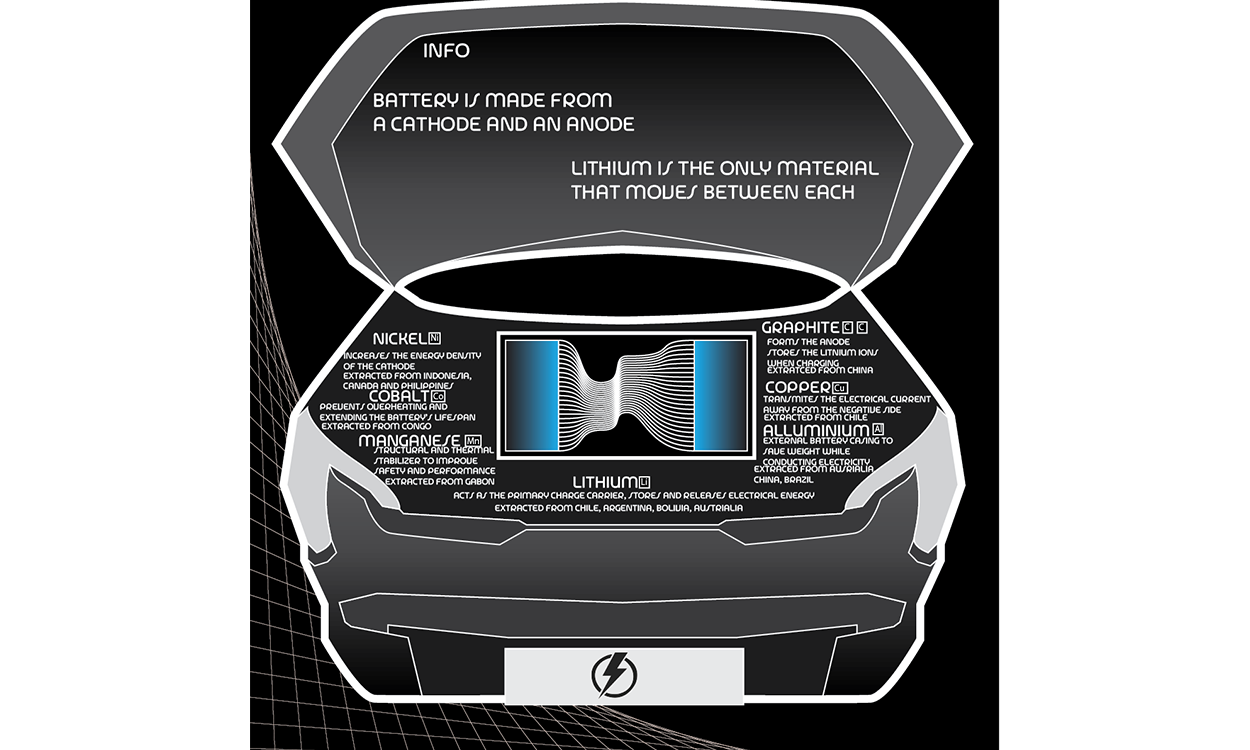
The minerals in the battery aren’t all pure, there are combined minerals such as the Cobalt, Nickel and Manganese combination. These specific minerals are combined to reduce the amount of Cobalt that is being used, to make the production more ethical. It also allows more Nickel to be used which pushes the energy that you can get out of the battery. Manganese stays the same in the combination because it anchors the structure and cuts down the reliance on Cobalt. This combination of minerals is most used because lithium nickel oxide doesn’t go where it should and travels to where the lithium needs to go and ends up blocking that site which then affects the running of the battery.